
Hello, This is Ankit, your guide, In previous blogs I’ve gone through ‘What is JCO, Explained’, ‘Tentative Angiveer Schedule 2026’, Now I’m going to explain how Agniveer Selection process really is (In depth) both physical & online one, this blog is gonna be a real value to those, who are preparing for Agniveer exam and are really curious to get a pre-look in the physical process of Agniveer.
Well, I’ll help you go through every possible question/doubts a Agniveer cadet can have for their potential future online and physical selection.
Agniveer Selection Process: Explained
Joining the Indian Army as an Agniveer is a dream for many, but it’s a journey with clearly defined stages. The selection process is designed to find the best of the best candidates who are not only mentally sharp but also physically robust and medically sound fit. It’s not just one test; it’s a multi-phase evaluation that ensures every selected individual is ready for the challenges of military life. If you’re looking to serve the nation, understanding this entire roadmap is your first step towards success.The entire Agniveer selection process is divided into two main phases:
- Phase I: The Online Common Entrance Exam (CEE)
- Phase II: The Recruitment Rally (Physical Fitness, Physical Measurement, Medical Test & Document Verification)
You must clear each phase to move on to the next, and your performance across these stages determines your final selection.
Phase I: The Online Common Entrance Exam (CEE)
This is the initial and a very crucial stage of the Agniveer recruitment. It’s a computer-based online test conducted at various examination centers across India. Think of it as the first major filter to assess your academic aptitude and general awareness. Only candidates who successfully clear this CEE are then eligible to proceed to Phase II.Purpose of the CEE: The main goal of the CEE is to efficiently screen a massive number of applicants. It tests your:
- Cognitive Abilities: How well you can think and solve problems
- Academic Knowledge: Your understanding of basic subjects relevant to military service.
What to Expect on CEE Exam Day:
When your admit card for the CEE arrives, here’s what you need to be prepared for:
- Reporting Time and Location: Your admit card will clearly state your exam center, date, and the reporting time. Make sure you reach well in advance to avoid any last-minute stress.
- Computer-Based Test (CBT) Format: The exam is entirely online. You’ll be provided with a computer at the center. If you’re not familiar with online tests, practicing mock tests is a must.
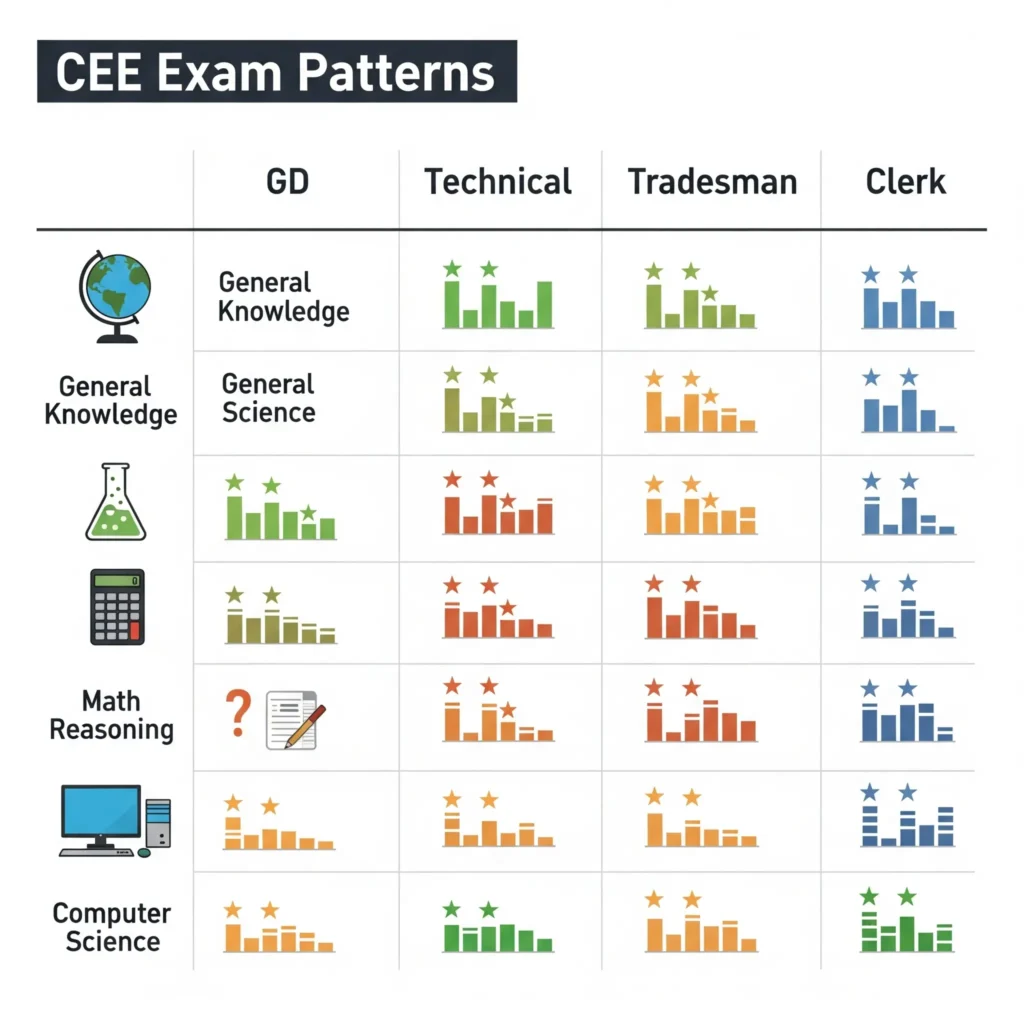
- Subjects Covered: The CEE generally includes multiple-choice questions (MCQs) from subjects like:General Knowledge, General Science, Mathematics, Logical Reasoning, For specific trades like Agniveer Clerk/Store Keeper Technical, English is also a compulsory section.
Helpful Tip: Practicing online mock tests is the best way to get comfortable with the CBT format and time management. It helps you understand how questions are presented and how to navigate the system efficiently.
Phase II: The Recruitment Rally
After you successfully clear the online CEE, you will receive an admit card for Phase II. This is the on-ground stage, commonly known as the Recruitment Rally, which is held at various Army Recruiting Offices (AROs) throughout the country. This phase is comprehensive and is designed to thoroughly evaluate your physical capabilities, medical fitness, and the authenticity of your documents.
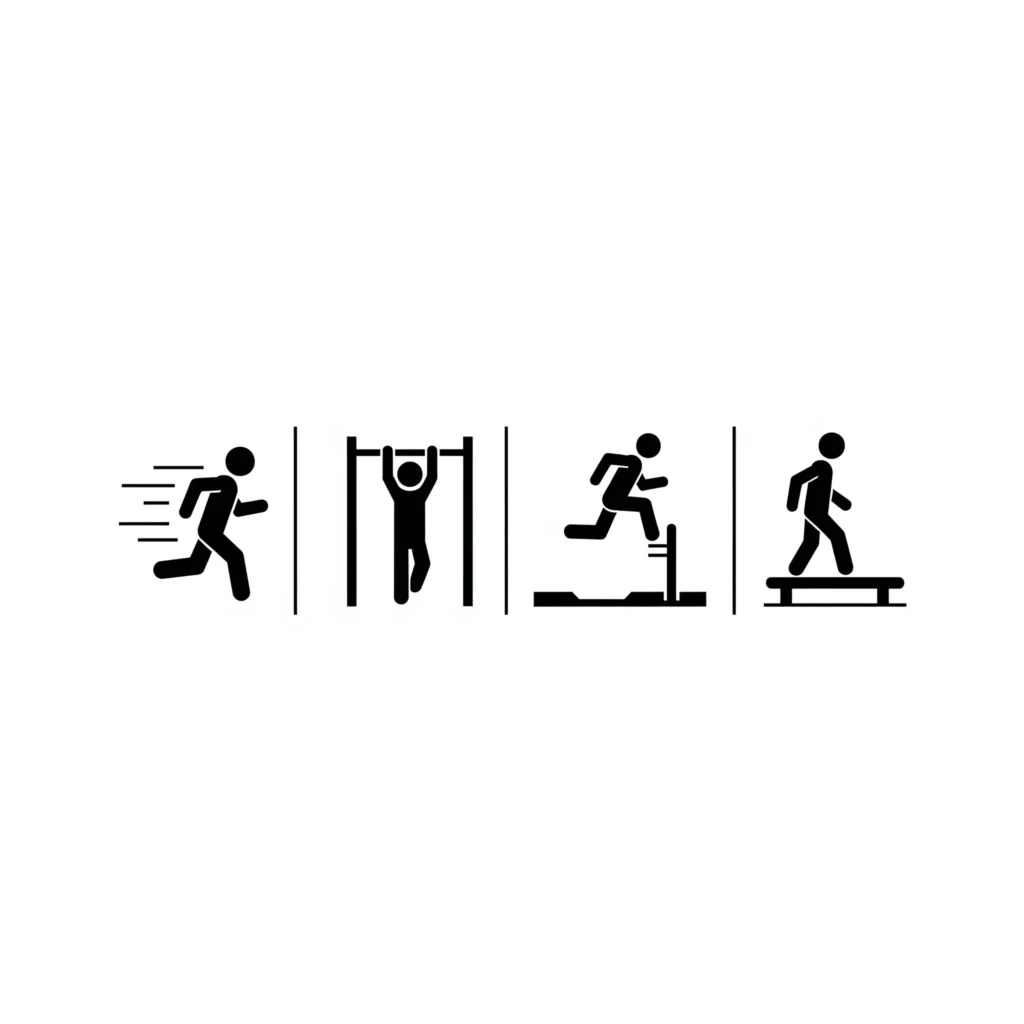
1. The Physical Fitness Test (PFT) This is where your physical training truly pays off. The PFT is a mandatory and critical component. You must pass all events to proceed, and your performance here also contributes to your final merit score.
• 1.6 Km Run:
- Procedure: You’ll run a 1.6-kilometer course, usually on a track. Officials will time each candidate.
- Marking: Marks are awarded based on your completion time.
- • Group I: Completing it within 5 minutes and 30 seconds fetches 60 marks.
- • Group II: Completing it between 5 minutes 31 seconds and 5 minutes 45 seconds fetches 48 marks.
- • Failure: Exceeding 5 minutes and 45 seconds results in disqualification for this round.
Yes, there is only two groups, rest will be marked as failures.
• Pull-Ups:
- Procedure: You’ll hang from a horizontal beam. You must pull yourself up until your chin is clearly above the beam.
- Marking: Marks are awarded based on the number of correct pull-ups performed.
- 10 pull-ups: 40 marks
- 9 pull-ups: 33 marks
- 8 pull-ups: 27 marks
- 7 pull-ups: 21 marks
- 6 pull-ups: 16 marks
- Failure: Fewer than 6 pull-ups, or incorrect form, results in disqualification.
• 9 Feet Ditch:
- Procedure: This is a test of courage and agility where you must jump across a 9-foot-wide ditch in a single leap.
- Qualification: This is a pass or fail event. You must clear the full distance.
• Zig-Zag Balance:
- Procedure: This tests your balance. You must walk along a zig-zag patterned beam or narrow plank without falling or losing balance.
- Qualification: This is a pass or fail event.
Helpful Tip: Don’t underestimate the 9-feet ditch and zig-zag balance. While qualifying, a simple mistake can lead to disqualification. Practice these too!
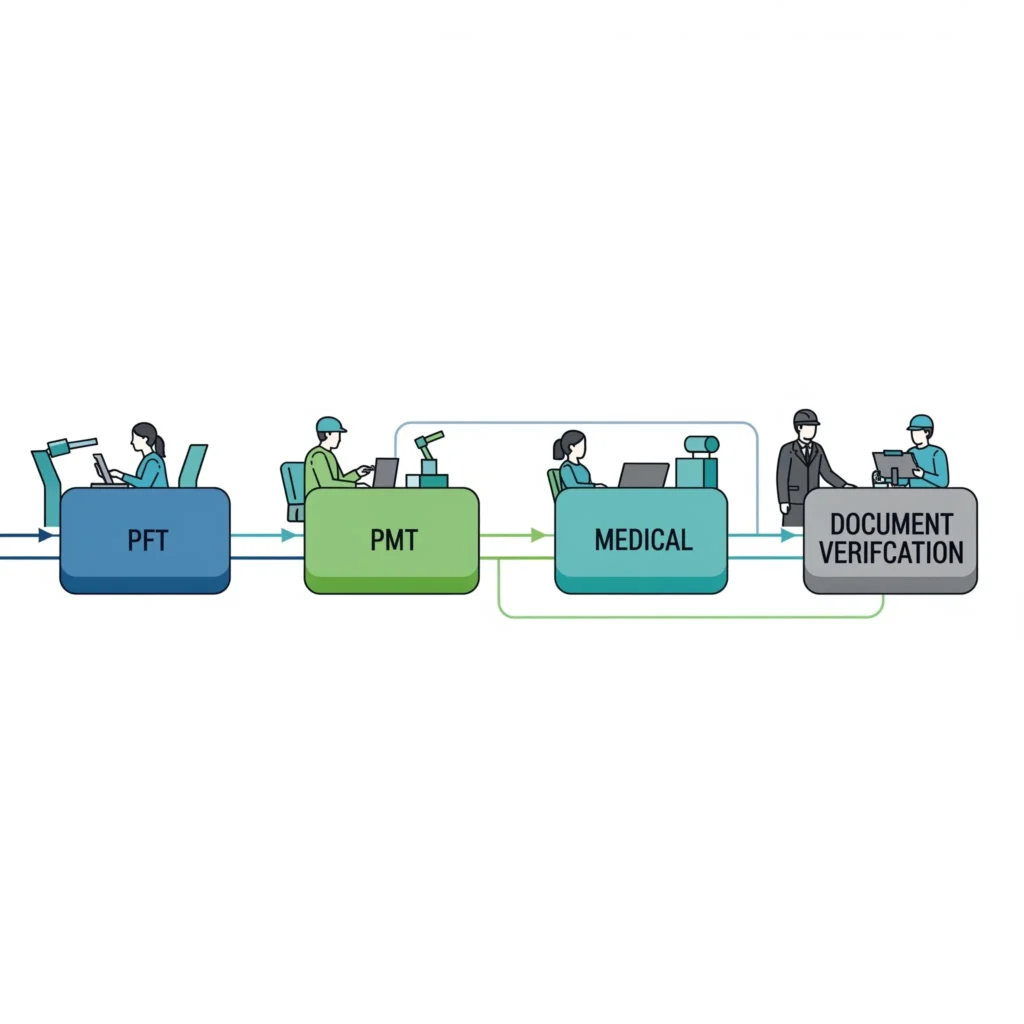
2) The Physical Measurement Test (PMT) Immediately after the PFT, candidates undergo the PMT. This is a crucial stage where your body measurements are verified against the required Army standards.
This test ensures your height, weight, and chest measurements meet the minimum criteria set for Agniveers
Requirements (General):
- Height: Typically 170 cm for Agniveer GD, Technical, and Clerk. There can be specific relaxations for candidates from certain regions (e.g., Gorkhas, hilly areas).
- Weight: Must be proportionate to your height and age, as per official Army medical standards. Being underweight or overweight can lead to issues.
- Chest: A minimum chest of 77 cm (unexpanded) is generally required, with a mandatory expansion of 5 cm.
Helpful Tip: Check the detailed regional height and weight charts available in the official notification. Know your measurements beforehand.
3. Medical Examination Once you clear the physical tests, you will undergo a comprehensive medical examination. This is conducted by a Medical Board of specialist Army doctors to ensure you are physically and mentally fit for military service
The medical exam is thorough and checks for:
- Vision and Hearing: Must meet strict standards, including normal color vision.
- Dental Health: Minimum dental points are required.General Physique: No major deformities, scars, or conditions like flat feet, knock knees, etc.
- Systemic Health: Checks for conditions like high blood pressure, heart murmurs, asthma, hernias, hydroceles, piles, etc.
- Mental Health: Must be mentally robust with no history of mental illness or epilepsy.
Helpful Tip: It’s wise to get a general check-up from your family doctor before the recruitment process starts. This can help you address any minor, correctable issues beforehand.
4. Document Verification This is the final stage of Phase II at the rally site. It’s absolutely critical. All original documents you submitted during your online application will be meticulously verified. Any discrepancy or missing document can lead to immediate disqualification.
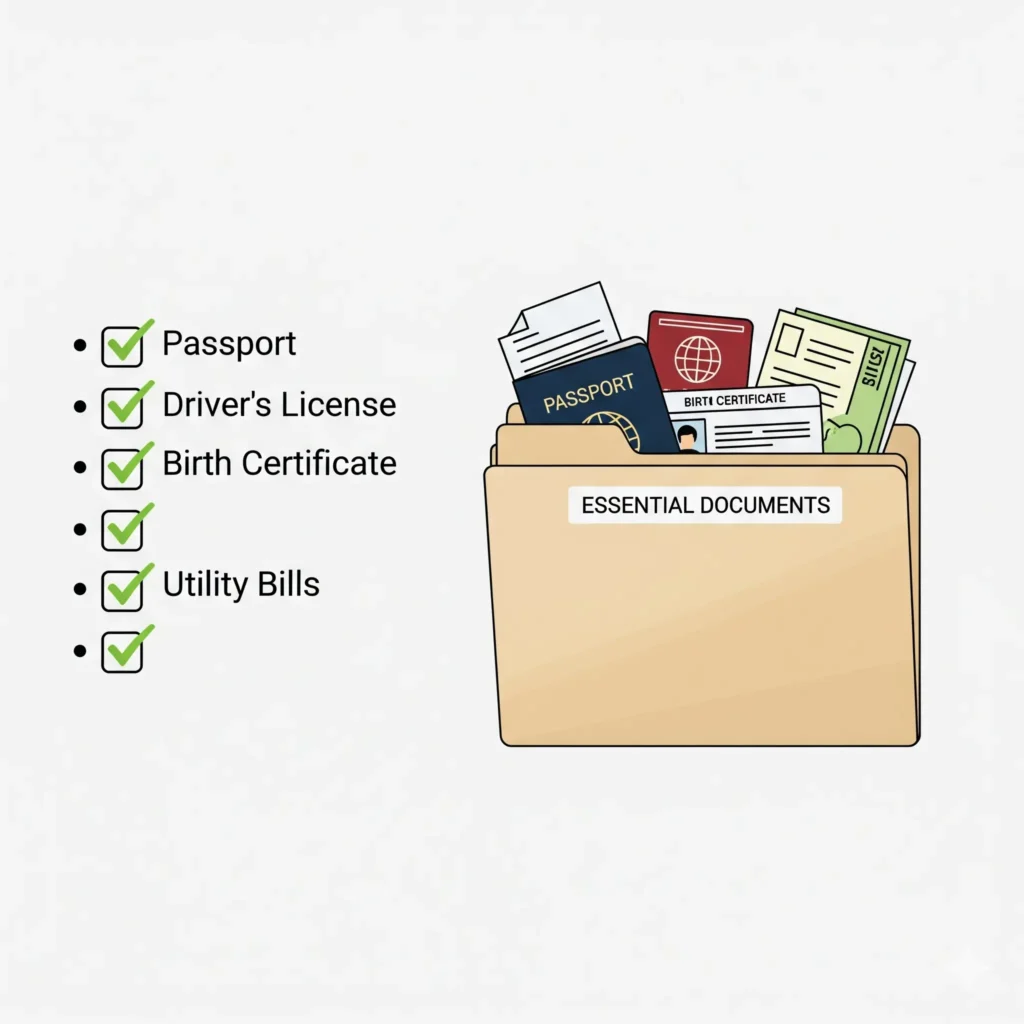
Required Documents (Checklist): Ensure you carry all these documents in original, along with attested photocopies:
- Admit Card: Printed with a laser printer on good quality paper.
- Photographs: Twenty recent passport-size, unattested, color photos with a white background.
- Education Certificates: Original mark sheets and passing certificates (Class 10th, 12th, or higher as applicable for your trade).
- Domicile Certificate: Issued by the Tehsildar/District Magistrate with your photo.
- Caste Certificate: Issued by the Tehsildar/District Magistrate with your photo (if applicable).
- Religion Certificate: If your religion is not mentioned in your caste certificate.
- Character Certificate: Issued by Village Sarpanch/Municipal Corporation (within last 6 months).
- Unmarried Certificate: For candidates under 21 years (issued by Village Sarpanch/District Administration, within last 6 months).
- NCC Certificate (if applicable): Original A/B/C certificate.
- Sports Certificate (if applicable): For bonus marks, from recognized sports bodies.
- Affidavit: Mandatory affidavit on non-judicial stamp paper, attested by a notary, confirming eligibility and no criminal record.Photo ID: Aadhaar Card and PAN Card.
Helpful Tip: Keep all your documents organized in a waterproof folder. Make multiple sets of photocopies. Do not wait till the last minute to gather these!
Final Merit List & Enrollment
After successfully navigating both Phase I (CEE) and Phase II (Recruitment Rally, including PFT, PMT, Medical & Document Verification), your journey culminates with the declaration of the Final Merit List
- How it’s Prepared: The final merit list is a compilation of candidates’ overall performance. It’s prepared based on a combination of your marks in the CEE, your performance in the PFT (where marks are awarded), and critically, the number of vacancies available for your specific trade and ARO.
What it Means?: If your name and roll number appear on this final merit list, congratulations! You have been provisionally selected as an Agniveer.
- Enrollment: Candidates on the final merit list will then receive their enrollment letters and further instructions regarding joining the training center. This is the moment you officially become a part of the Indian Army.
Conclusion
While the test’s are thorough and difficulty is highest (both mentally and physically) but it gives the chance to individual to cross their limits and forge themselves in strict discipline which is essential for a healthy lifestyle, this is not just test’s they help you indentify who you are? What can you become? and forge you through sheer discipline.
If you are preparing for Indian Armed Forces, then give your all, it doesn’t matter if you passed or fail, but how you prepare yourself every day, every hour.
This is a like a marathon.
And lastly, I heard this line from someone that
~ It’s not you who choose Army, It’s Army who chooses you!