
If you’ve ever waited for the Indian Army cut-off marks to be released, you know the feeling — that mix of hope, nervousness, and endless refreshing of websites. Cut-off marks can feel like a mystery sometimes. One year they’re high, another year they dip a bit, and nobody seems to fully understand why they rise or fall. Candidates often guess based on rumours or random posts online, and that just adds more confuzzion than clarity.
This blog breaks everything down in a simple, direct, and human way. We’ll talk about what cut-offs really mean, what influences them, how they’ve moved over the past few years, and what you can learn from these patterns for your upcoming attempts. Think of this as a calm conversation with someone who has seen how these trends shift over time — not a lecture, not a coaching-style speech, just honest guidance.
Let’s get into it.
What Exactly Are Indian Army Cut-off Marks?
Cut-off marks are the minimum scores a candidate must achieve to qualify for the next stage of recruitment. These marks are usually set for the Common Entrance Exam (CEE), though some categories also refer to physical performance standards as benchmarks.
A cut-off is not just a number; it’s a reflection of:
- Competition levels
- Difficulty of the exam
- Number of vacancies
- Category-wise performance
- Reservation norms (where applicable)
Every cycle has its own identity. That’s why the exact number changes, sometimes slightly and sometimes more noticeably.
Why Do Cut-offs Change Every Year?
Candidates often get frustrated when they expect a certain score to be enough and then the cut-off shows up higher. But cut-offs aren’t random. They shift for very real reasons.
1. Number of Applicants
The more people who apply and perform well, the higher the cut-off rises. When fewer candidates appear or many perform poorly, cut-offs may dip.
2. Difficulty Level of the CEE
This is a big factor.
- Tough paper = lower cut-off
- Easy paper = higher cut-off
Some years, even a small change in paper difficulty creates a noticeable difference.
3. Vacancy Count
If the number of available seats is high, cut-offs often become more lenient.
If seats are limited, the marks naturally rise.
4. Category-wise Competition
Cut-offs differ between:
- General Duty (GD)
- Clerk/SKT
- Technical
- Tradesman
More competition in one category means faster rising cut-offs.
5. Overall Performance Trends
If most candidates perform exceptionally well, the cut-off rises with them. Some years see massive improvements in preparation because of coaching, online material, and peer competition.
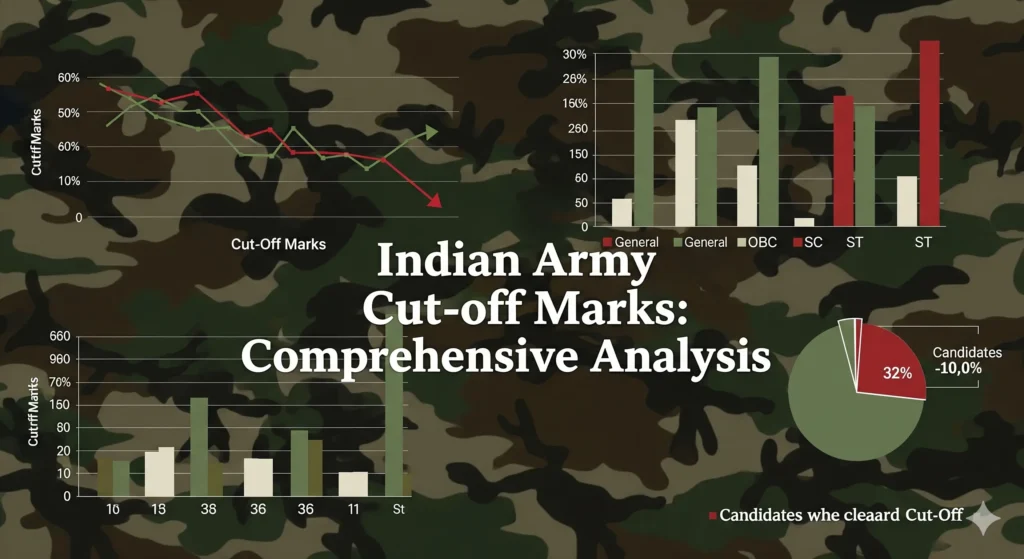
Cut-off Patterns for Major Categories (Past Trend Overview)
Let’s look at general past trends. These are not exact numbers from any single zone but a broad reflection of how cut-offs have behaved recently.
1. Agniveer General Duty (GD)
GD cut-offs have historically been moderate but sensitive to competitive pressure.
Typical Past Ranges
- 60% to 75% depending on region
- Some high-competition states show even 78–80%
Trend Summary
- Rising trend due to larger applicant turnout
- GK and Math scoring variations affect overall marks
- High physical fitness turnout means written exam becomes a stronger filter
Cut-offs for GD rarely drop unless the paper is very tough.
2. Agniveer Clerk / Store Keeper Technical
Clerk cut-offs are consistently high because the paper is scoring and English plays a major role.
Typical Past Ranges
- 75% to 88%
- In competitive zones, you may even see 90%+
Trend Summary
- Rapid rise over the past few years
- English section boosts or breaks scores
- Negative marking plays a smaller role because high performers dominate
This category sees some of the highest cut-offs in the entire recruitment cycle.
Read More:- Ultimate document verification checklist
3. Agniveer Technical
Technical category cut-offs depend heavily on Physics and Math difficulty.
Typical Past Ranges
- 55% to 65% for moderate papers
- 65% to 72% when the paper is easy
Trend Summary
- Fairly stable past few years
- Slight upward shifts due to rising science-stream applicants
Technical cut-offs don’t spike wildly, but they do rise slowly and steadily.
4. Agniveer Tradesman
Tradesman category generally has the lowest cut-offs among all because the exam level is simpler.
Typical Past Ranges
- 35% to 55%
Trend Summary
- Very stable trend
- Minor fluctuations depending on state and applicant turnout
- Cut-offs stay comfortable, but careless mistakes can still cost the chance
Factors That Specifically Influence State-wise Variations
Candidates often compare their cut-offs with other states and panic. But each zone has its own dynamics.
Here’s why:
1. Recruitment Zone Density
States with massive youth populations — like UP, Bihar, Haryana, Rajasthan — naturally see higher cut-offs.
2. Educational Exposure
Some areas have better academic resources, leading to stronger written exam performances.
3. Physical Fitness Culture
States with strong fitness traditions often see more candidates clearing the PFT easily, leaving the CEE as the main barrier.
4. Vacancy Distribution
Some states have more vacancies in a cycle, allowing cut-offs to relax slightly.
5. Paper Difficulty (Zone-wise)
Occasionally, different zones experience slightly varied difficulty levels, depending on the cycle.
Because of these differences, comparing two states without context will always feel misleding.
Year-wise Behavior You Should Know
Even if exact numbers vary, here’s a simple observation:
GD Category
- Slight rise over the last few years
- Candidates more aware, more prepared
- Competition expanding quickly
Clerk Category
- Sharp growth in cut-offs
- English proficiency becoming a decisive factor
Technical Category
- Mostly stable, slight rise annually
- Depends on science difficulty
Tradesman
- Least movement
- Still important to score safely
Understanding these patterns helps you predict future trends better.
How to Analyse Cut-offs Smartly (Not Emotionally)
Candidates often take cut-off analysis too personally — “If last year’s cut-off was 72%, then this year I must get exactly that.”
But the point of analysis is not to chase last year’s score; it’s to create a buffer of safety.
Smart Way to Think
- If last year’s cut-off was 70%, target 80–85%.
- If the difficulty rises, your margin protects you.
- If the difficulty drops, you stay ahead of the crowd.
Overthinking cut-offs creates stress. Understanding them creates steadiness.
Common Mistakes Candidates Make When Reading Cut-off Trends
1. Depending on Rumours Instead of Official Results
Most viral “leaked cut-off predictions” are baseless.
2. Assuming All States Have the Same Cut-off
This leads to misplaced expectations.
3. Studying Only to Match the Cut-off
Always aim higher.
4. Ignoring Negative Marking Impact
Guesswork kills scores more than candidates realise.
5. Panicking Because a Friend Scored Higher
Comparisons ruin focus. Stay in your own lane.
Avoiding these small mistakes can dramatically improve your preparation mindset.
What the Past Trends Teach Us for Future Exams
Based on previous years, here are the most consistent lessons:
- Cut-offs rarely fall drastically.
- Small fluctuations are normal.
- Clerk category will stay high due to scoring English sections.
- GD will keep rising because of competition.
- Technical will depend mainly on Physics and Math difficulty.
- Tradesman will remain stable but not “easy.”
Most importantly: the rising trend means preparation must go beyond average.
Conclusion
Understanding the Indian Army cut-off marks isn’t about memorizing old numbers. It’s about recognizing patterns, preparing smarter, and giving yourself enough margin to stay safe no matter how the paper behaves. Every year, lakhs of candidates dream of wearing that uniform, but only the disciplined, informed, and self-aware make it through.
Use these cut-off trends as a compass — not a fear trigger. Study consistently, revise wisely, and aim higher than just “qualifying.” When your efforts are solid, cut-offs don’t intimidate you; they simply guide you.
Stay steady, stay focused, and believe that you’re capable of rising above any number set on paper, even on the days it feels overwhellming.
The future belongs to those who prepare for it today. — Malcolm X